
Sri Lanka Mobile Network Guide 2026: Best SIM Cards, eSIMs, Coverage & Tourist Tips


Traveling through Sri Lanka in 2026 is easier than ever. Whether you are exploring the beaches of Mirissa, catching the famous train to Ella, hiking through Sigiriya, or wandering the busy streets of Colombo, staying connected matters. Most travelers rely heavily on mobile internet for Google Maps, PickMe, WhatsApp, online bookings, translation apps, and social media.
The good news is that Sri Lanka offers some of the cheapest mobile data in Asia. Tourist SIM cards are affordable, easy to activate, and widely available at the airport and across the island. The challenge is choosing the right network.
This guide covers everything international travelers need to know about mobile networks in Sri Lanka in 2026. We will compare coverage, speeds, tourist SIM packages, eSIM support, airport setup, data prices, and real-world performance across the country. We also share honest travel experiences and practical tips so you can avoid common mistakes after landing.
After testing different networks and reviewing traveler experiences, SLT-Mobitel stands out as one of the best overall choices for most tourists visiting Sri Lanka in 2026. It delivers strong nationwide coverage, reliable rural connectivity, competitive tourist packages, and increasingly solid 4G and 5G performance without feeling overpriced or overly commercial.

Why You Need a Local SIM Card in Sri Lanka
The moment you land in Sri Lanka, mobile internet becomes essential. Airport Wi-Fi can be unreliable, and roaming charges from overseas carriers are usually expensive.
A local SIM card helps with:
- Booking taxis through PickMe or Uber
- Navigating with Google Maps
- Contacting hotels and tour operators
- Uploading photos and videos
- Using translation apps
- Watching YouTube or Netflix during long train rides
Most tourists buy a SIM card immediately after arriving at Bandaranaike International Airport because setup takes less than 10 minutes.
Mobile Networks in Sri Lanka Explained
Sri Lanka currently has three major mobile operators:
- SLT-Mobitel
- Dialog Axiata
- Hutch Sri Lanka
Each network has strengths and weaknesses depending on where you travel and how you use your phone.

1. SLT-Mobitel – Best Balanced Choice for Travelers
For many travelers in 2026, SLT-Mobitel offers the best balance between coverage, stability, pricing, and rural performance.
Mobitel is backed by Sri Lanka Telecom, the country’s largest telecommunications infrastructure provider. Over the past few years, the network has expanded heavily into rural areas, hill country regions, and tourist hotspots. Travelers moving outside Colombo often notice that Mobitel remains stable even in areas where other networks fluctuate.
One of the biggest advantages is consistency. Speeds may not always be the absolute fastest, but the network feels dependable across the island. That matters more than peak speed when you are relying on Google Maps in remote areas or uploading content while traveling.
Mobitel performs especially well in:
- Ella
- Nuwara Eliya
- Sigiriya
- Kandy
- Southern coastal regions
- Plantation and hill-country routes
- Many rural villages and travel corridors
Another reason travelers increasingly prefer Mobitel is eSIM support. The company has expanded eSIM compatibility for tourists and newer smartphones, making setup easier for modern travelers.
What makes Mobitel appealing is that it quietly works well without aggressively marketing itself as the “premium” option. It feels practical, reliable, and travel-friendly.
2. Dialog Axiata – Fastest and Most Popular Network
Dialog remains the largest mobile operator in Sri Lanka and is still extremely popular among tourists.
Its biggest advantage is coverage reach and speed. In major cities and tourist destinations, Dialog often delivers the fastest mobile internet experience. The network has a huge dealer presence and finding reload cards or customer support is easy almost anywhere in the country.
Dialog is especially strong in:
- Colombo
- Galle
- Negombo
- Southern coast beach towns
- Popular tourist routes
- Urban areas
Many travelers still consider Dialog the safest “default” choice because coverage is generally excellent nationwide. Reddit discussions from travelers and locals consistently mention Dialog’s broad reach across Sri Lanka.
However, some travelers report occasional speed drops in crowded areas or during peak usage times. Others mention that Mobitel sometimes feels more stable during bad weather or rural travel.
Still, Dialog remains a very strong option in 2026 and is particularly good for travelers focused on speed, social media uploads, and city travel.
3. Hutch Sri Lanka – Budget-Friendly Alternative
Hutch is usually the cheapest option for prepaid data in Sri Lanka.
If your trip is mainly around Colombo, beach towns, or urban tourist areas, Hutch can save money while still offering decent internet performance. Heavy data users sometimes prefer Hutch because of affordable unlimited packages.
The downside is coverage consistency. Outside cities and major tourist routes, the signal can become unreliable. Remote areas, national parks, and hill-country regions are where Hutch struggles most.
For budget backpackers staying mostly in urban areas, Hutch can still be a smart option.

Where to Buy a Tourist SIM Card in Sri Lanka
Airport SIM Counters
The easiest place to buy a SIM card is immediately after arrival at Bandaranaike International Airport.
Mobitel, Dialog and Hutch operate official tourist counters inside the arrivals area. Staff usually handle everything for you:
- SIM registration
- Activation
- APN settings
- Initial top-up
- eSIM setup if supported
The process is fast and tourist friendly. Most travelers are connected within 5–10 minutes.
City Shops and Mobile Stores
You can also buy SIM cards from:
- Official carrier stores
- Small mobile shops
- Supermarkets
- Electronics stores
However, airport setup is usually easier because staff are used to international travelers.
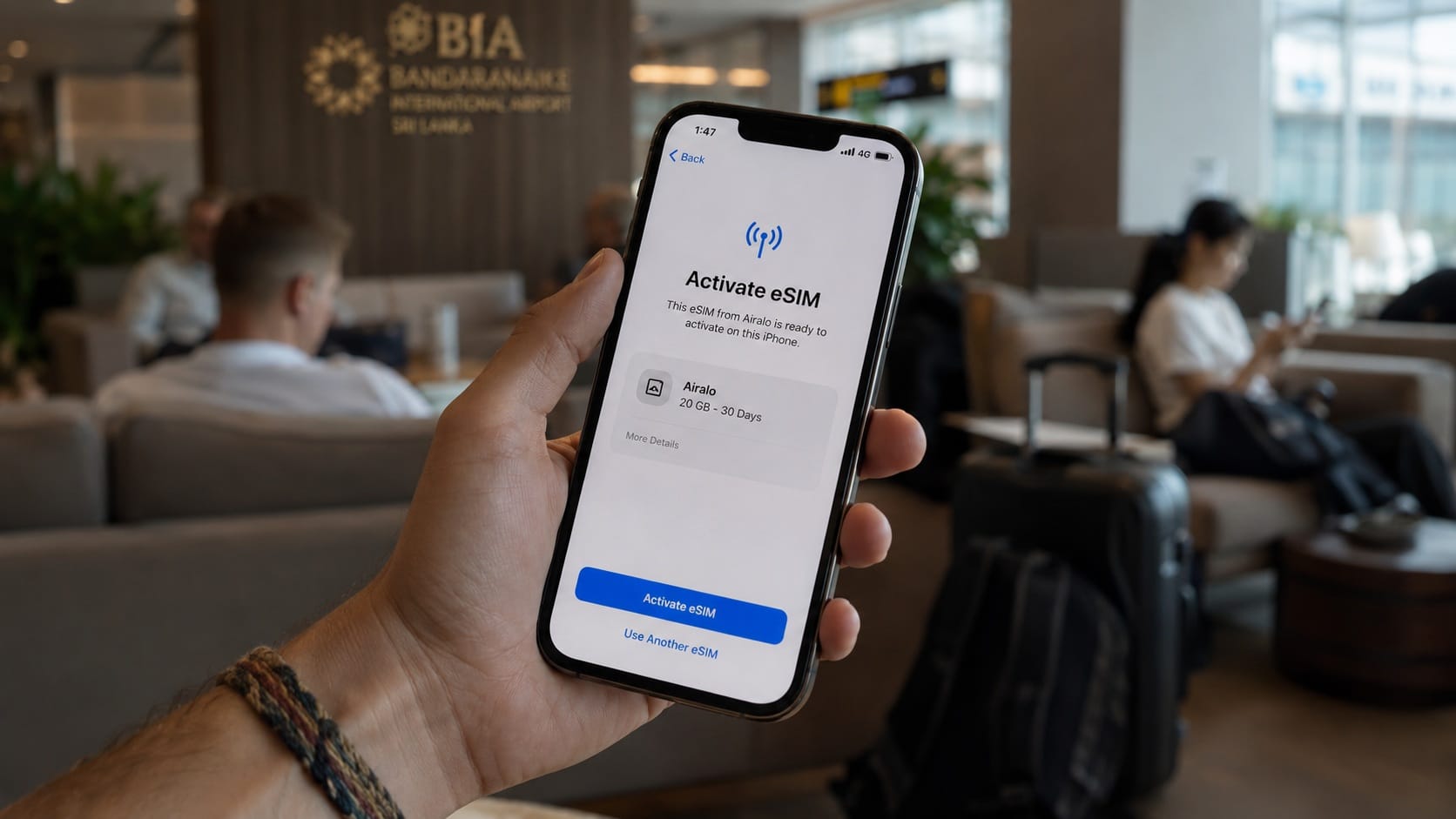
Physical SIM vs eSIM in Sri Lanka
In 2026, eSIM adoption in Sri Lanka is growing quickly.
Both SLT-Mobitel and Dialog now support eSIMs for many modern devices.
Why Travelers Prefer eSIMs
eSIMs are becoming popular because they:
- Remove the need for physical SIM swapping
- Allow dual SIM use
- Keep your home number active
- Save time at the airport
For iPhone users and premium Android devices, eSIM is often the easiest option.
Still, physical SIM cards remain slightly simpler for less tech-savvy travelers.
Mobile Coverage Across Sri Lanka
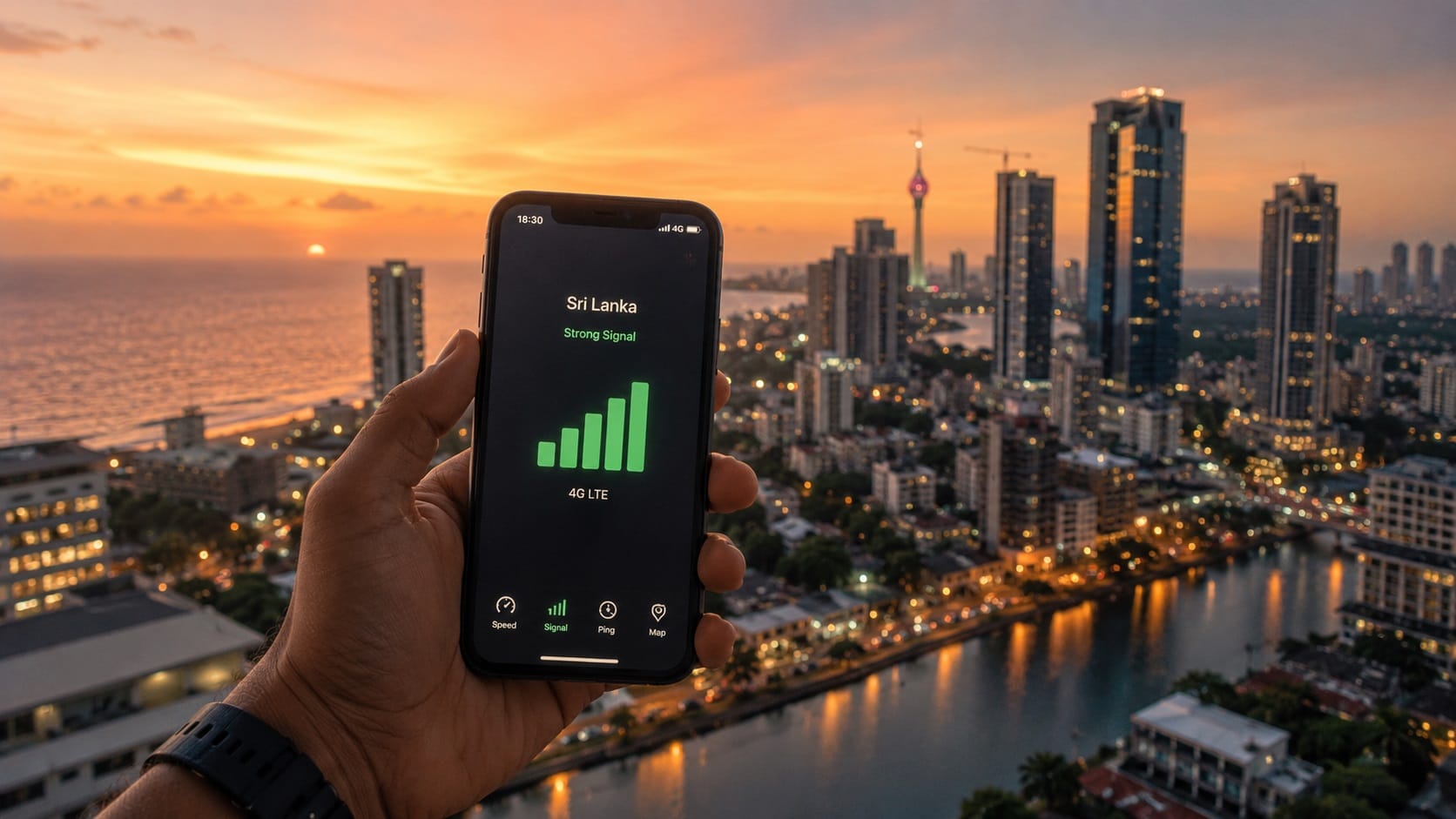
Coverage in Sri Lanka is generally excellent for a developing island nation.
Excellent Coverage Areas
You will usually get strong 4G signals in:
- Colombo
- Negombo
- Kandy
- Galle
- Mirissa
- Unawatuna
- Ella
- Sigiriya
- Nuwara Eliya
- Bentota
Areas With Weak Signals
Coverage becomes weaker in:
- Deep national parks
- Remote jungle areas
- Certain mountain routes
- Some northern and eastern rural areas
Even the best networks can lose signal in isolated regions like parts of Yala or Wilpattu National Parks. Downloading offline Google Maps before long journeys is highly recommended.
How Much Mobile Data Do Travelers Need?
Most tourists underestimate how much data they use while traveling.
Light Users
Good for:
- Messaging
- Maps
- Occasional browsing
Recommended: 10–15GB
Average Travelers
Good for:
- Social media
- Video calls
- Streaming music
- Frequent navigation
Recommended: 20–30GB
Heavy Users
Good for:
- YouTube uploads
- Remote work
- Netflix streaming
- Content creation
Recommended: 50GB or unlimited plans.
Fortunately, Sri Lanka’s mobile data prices are very cheap compared to Europe, Australia, or North America. Even large packages cost only a few dollars.
Real Travel Experience: Which Network Feels Best?
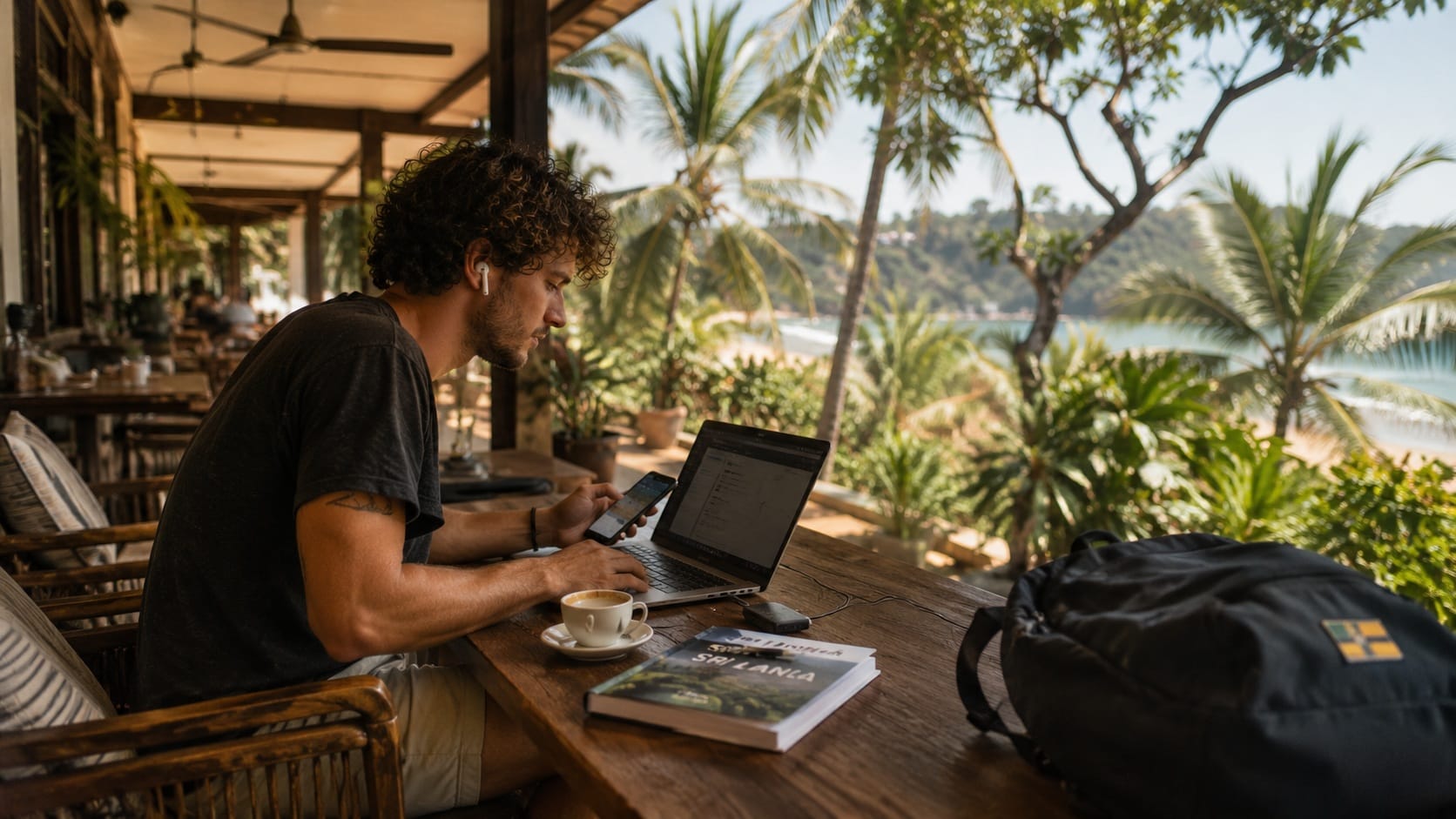
Travelers moving around the island often describe Mobitel as more dependable during long-distance travel and rural exploration. Dialog feels faster in cities, while Mobitel feels more stable in difficult coverage areas.
That difference becomes important when you are:
- Taking trains through hill country
- Visiting tea plantations
- Exploring waterfalls
- Traveling through less-developed regions
For short city stays, Dialog is excellent. But for full-island travel, Mobitel increasingly feels like the smarter long-term travel companion.
Important Tips Before Buying a SIM
Your Phone Must Be Unlocked
Many travelers forget this. If your phone is carrier-locked from your home country, Sri Lankan SIM cards may not work.
Bring Your Passport
Sri Lankan telecom regulations require SIM registration using your passport.
Activate Before Leaving the Counter
Always test:
- Mobile data
- Calls
- SMS
- Internet speed
before leaving the airport booth.
Is 5G Available in Sri Lanka?
5G is still developing in Sri Lanka in 2026.
Limited 5G services are available in parts of Colombo and selected urban areas through Dialog and Mobitel. However, most travelers will mainly use 4G LTE during their trip.
The good news is that Sri Lanka’s 4G performance is usually more than enough for streaming, navigation, and remote work.

Final Verdict: Best Mobile Network for Tourists in Sri Lanka in 2026
Every traveler has different priorities.
- Want the fastest city speeds? Dialog is excellent.
- Want the cheapest plans? Hutch works well in urban areas.
- Want broad island-wide reliability and strong rural performance? SLT-Mobitel stands out.
For most international visitors traveling across Sri Lanka, SLT-Mobitel feels like the best all-around choice in 2026.
It combines:
- Strong nationwide coverage
- Reliable rural connectivity
- Competitive tourist packages
- Growing eSIM support
- Good value for money
- Stable everyday performance
Most importantly, it feels dependable while actually traveling around the island and that matters more than flashy speed test numbers.
Sri Lanka is one of the easiest countries in Asia for tourists to stay connected. Whether you choose Mobitel or Dialog, getting online is simple, affordable, and fast.
Just land, grab a SIM card, and start exploring paradise.